

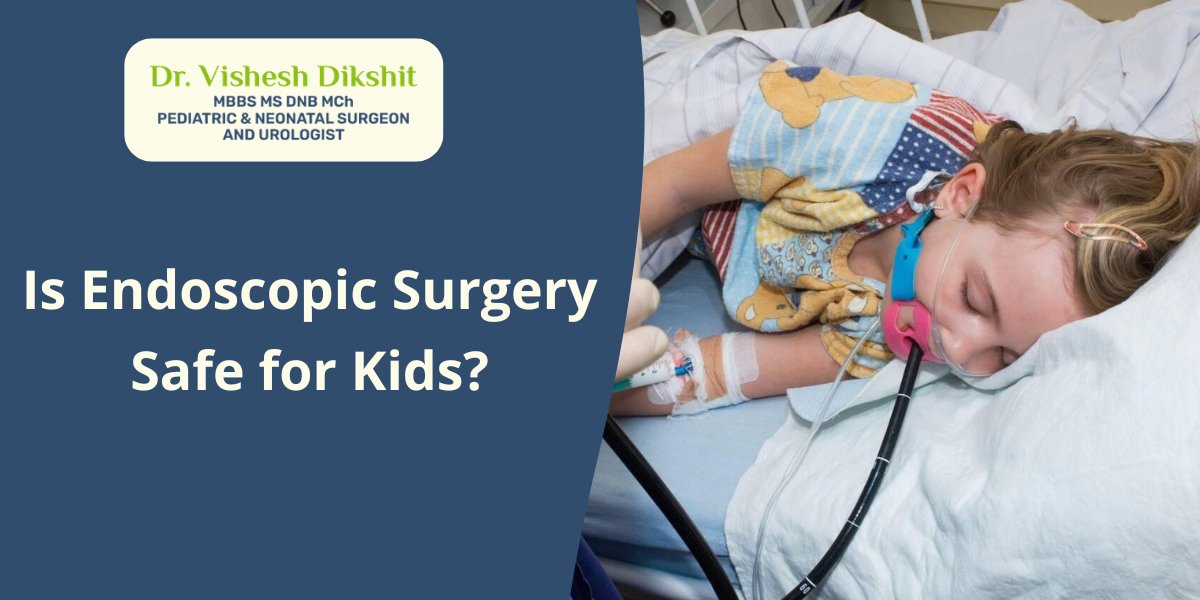
If your child needs surgery, the words “endoscopic surgery” might sound intimidating. As a parent, your top concern is safety. Is endoscopic surgery safe for kids? The short answer is yes — when performed by experienced pediatric specialists in the right setting. Modern minimally invasive endoscopic techniques have transformed pediatric care, offering smaller incisions, faster healing, and fewer complications than traditional open surgery.
What Is Endoscopic Surgery in Children?
Endoscopic surgery uses thin, flexible or rigid tubes (endoscopes or laparoscopes) with tiny cameras and lights to see inside the body. Surgeons operate through very small incisions (often just 3–5 mm) or natural openings like the mouth or nose — no large cuts required.
There are two main categories:
- Flexible endoscopy (e.g., upper GI endoscopy/EGD or colonoscopy) — mostly diagnostic but can treat polyps or bleeding.
- Rigid endoscopic surgery (laparoscopic or thoracoscopic) — true “keyhole” operations for appendicitis, hernias, gallbladder removal, reflux surgery, or even brain and sinus procedures.
Is Endoscopic Surgery Safe for Children?
Yes, endoscopic surgery is generally considered very safe for children when performed by experienced pediatric surgeons. Over the years, this technique has become a standard practice in many hospitals worldwide.
Doctors often prefer endoscopic procedures for children because they:
- Reduce trauma to the body
- Require smaller incisions
- Lead to faster healing
- Lower the risk of infection
Modern pediatric surgical teams are specially trained to perform minimally invasive procedures on children of all ages, including infants.
Common Endoscopic Procedures for Kids
Pediatric endoscopic surgery treats conditions from newborns to teens:
- Laparoscopic appendectomy (most common emergency procedure)
- Inguinal or umbilical hernia repair
- Fundoplication for severe reflux
- Cholecystectomy (gallbladder removal)
- GI endoscopy for celiac disease, IBD, or foreign-body removal
- Endoscopic sinus surgery for chronic sinusitis
- Neuroendoscopic procedures or craniosynostosis repair in infants
These procedures work safely even in premature babies and toddlers when done in specialized children’s hospitals.
How Doctors Ensure Safety During the Procedure
Medical teams follow strict safety protocols when performing endoscopic surgery on children.
These include:
Advanced Imaging Technology
High-definition cameras provide surgeons with clear internal views, improving precision.
Pediatric Anesthesia Specialists
Children are given anesthesia by specialists trained in pediatric care to ensure safety and comfort.
Sterile Surgical Environment
Hospitals maintain strict sterilization standards to prevent infection.
Continuous Monitoring
During the procedure, doctors monitor the child’s heart rate, oxygen levels, and blood pressure.
These precautions help ensure the procedure is as safe as possible.
When Should Parents Consider Endoscopic Surgery?
Doctors may recommend endoscopic surgery when:
- A condition cannot be diagnosed through non-invasive tests
- A minimally invasive procedure can treat the problem effectively
- Traditional surgery would be more complex or risky
In many cases, endoscopic procedures help avoid major surgeries altogether.
Endoscopic surgery has transformed pediatric healthcare by making many procedures safer, less invasive, and faster to recover from. For many children, it provides an effective solution with minimal discomfort and excellent outcomes.
If your child has been advised endoscopic surgery, don’t hesitate to reach out to a specialist Dr. Vishesh Dikshit, Pediatric & Neonatal Surgeon in pune over 17 years of experience, has particular expertise in pediatric minimal access surgeries
Frequently Asked Questions (FAQ
What is endoscopic surgery for children?
Endoscopic surgery is a minimally invasive procedure that uses a thin tube with a camera to diagnose or treat medical conditions in children without making large surgical cuts.
Is endoscopic surgery painful for kids?
Endoscopic surgery usually causes less pain compared to traditional surgery because it involves smaller incisions and minimal tissue damage. Doctors also use anesthesia to keep children comfortable during the procedure.
Are there any visible scars after the procedure?
The incisions are so small (often called “keyhole” surgery) that scars are minimal and frequently become nearly invisible as the child grows.
How long is the recovery period for a child?
Recovery is typically much faster. Most children can return to school within 48 hours and resume light activities. However, strenuous sports or swimming are usually restricted for about 10 to 14 days to ensure complete internal healing.